1672 or 1679?
No 1672 deed has ever been found: it was l’île Madame that was granted that year. The seigneury between Gentilly and Deschaillons was granted from 1678 to 1679, by Frontenac and then Duchesneau.
Written in French by Alain Manset, March 25, 2019. Quotations from period documents are left in the original. Lire l’original en français.
Was the Lévrard-Becquet seigneury granted in 1672 or 1679?
Tradition holds that the grant of the seigneury of St-Pierre was made in 1672; that date is written just about everywhere — history websites, scholarly books, the signs at the entrance to the municipality.
That date is correct as regards the first fief or seigneury granted to Romain Becquet: l’île Madame, a small island southeast of l’île d’Orléans, today the property of Laurent Beaudoin, builder of the multinational Bombardier. An examination of the documents, however, shows that 1679 is the only valid date for the Lévrard-Becquet seigneury.
Indeed, we have never found a deed of concession dated 1672, whether at BAnQ or in the Ottawa archives; searches in the records of the Sovereign Council and in the Archives nationales de France came up empty. The documents had been mislaid (that still happens nowadays), and historians relied on hastily read deeds of confirmation of concession to keep the claim alive.
In 1680, a confirmation of concession was issued by Duchesneau; note that several seigneuries were reconfirmed on that occasion, with no detail of their locations
His Majesty Louis XIV confirms the grants made to a good number (more than two dozen) of seigneurs between 12 October 1676 and 5 September 1679, and mentions Romain Becquet’s seigneury without describing it in detail.
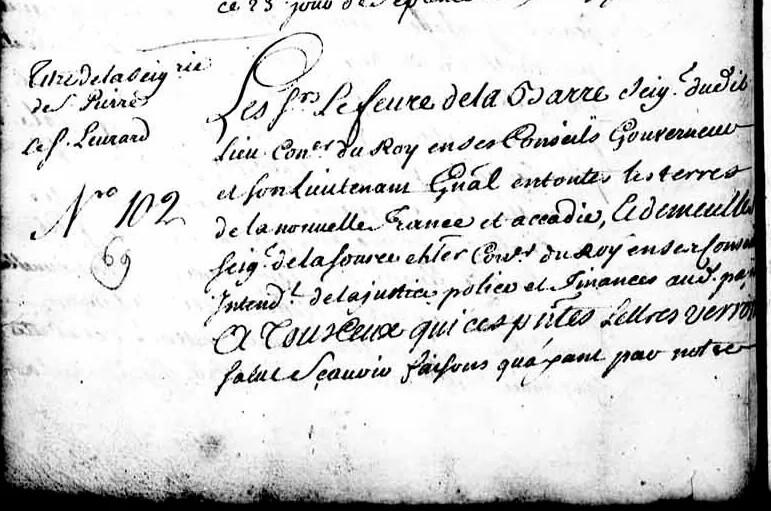
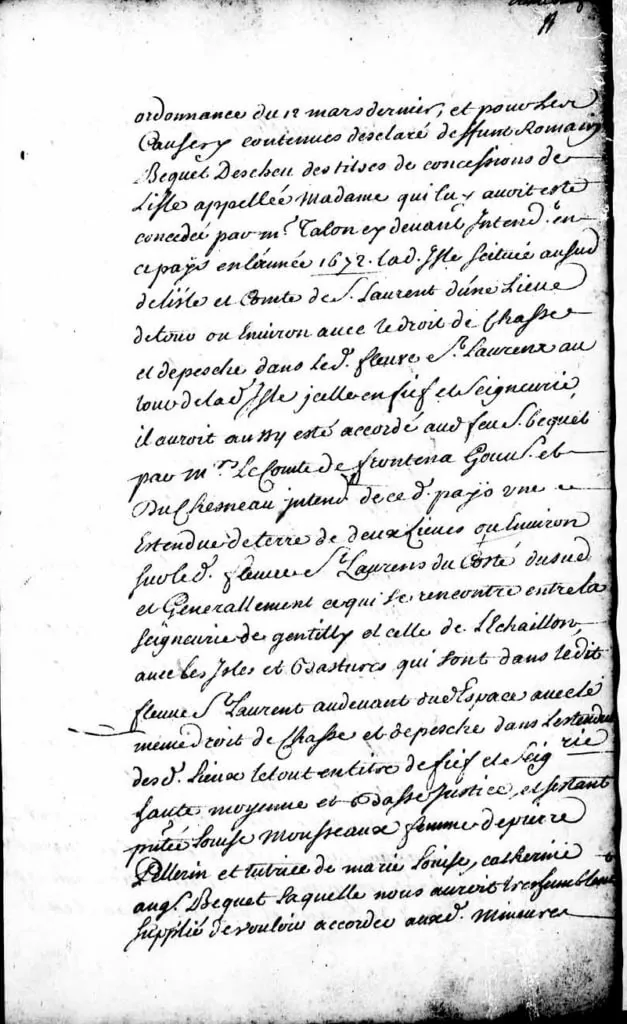
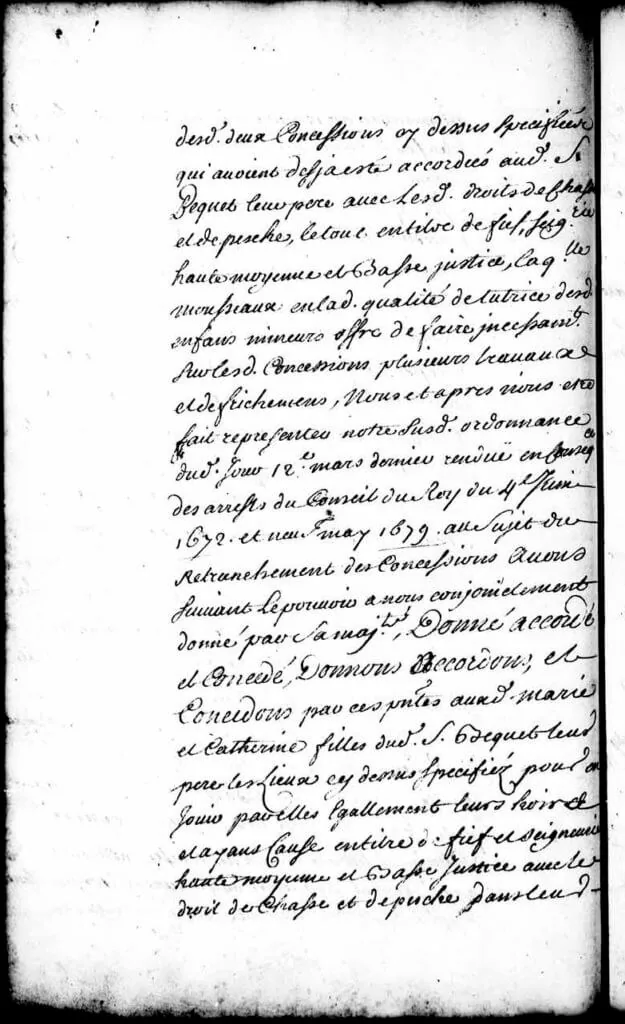
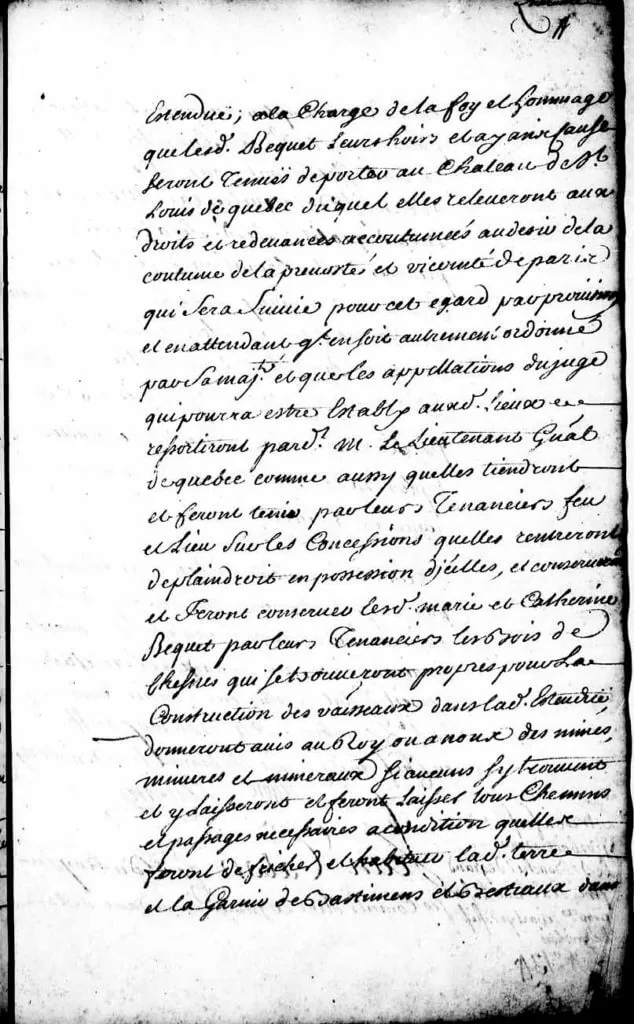
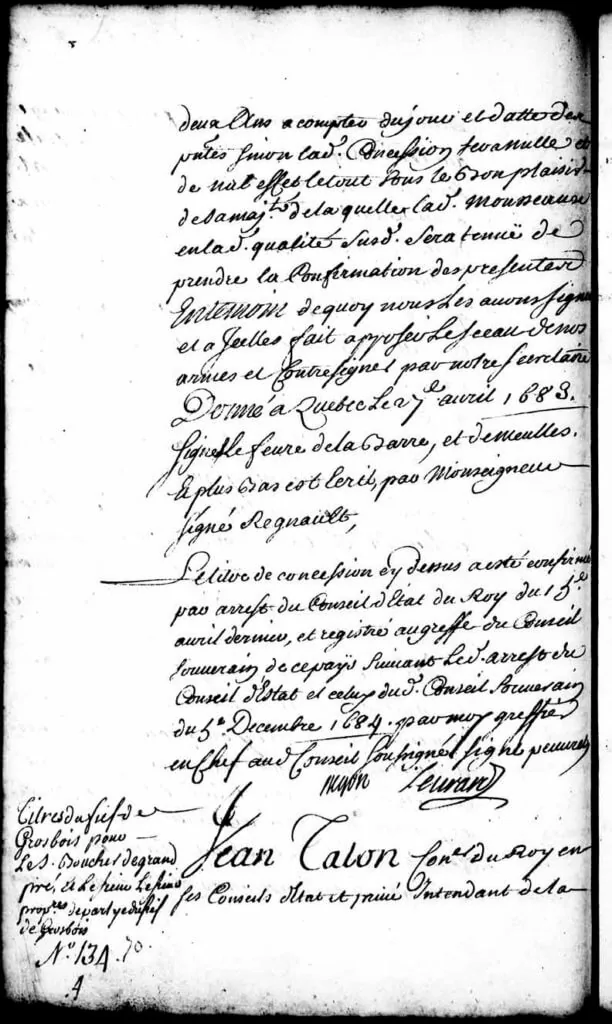
Here are the two pages of the 1680 document, with a transcription into present-day French; deciphering the original is something of a challenge!
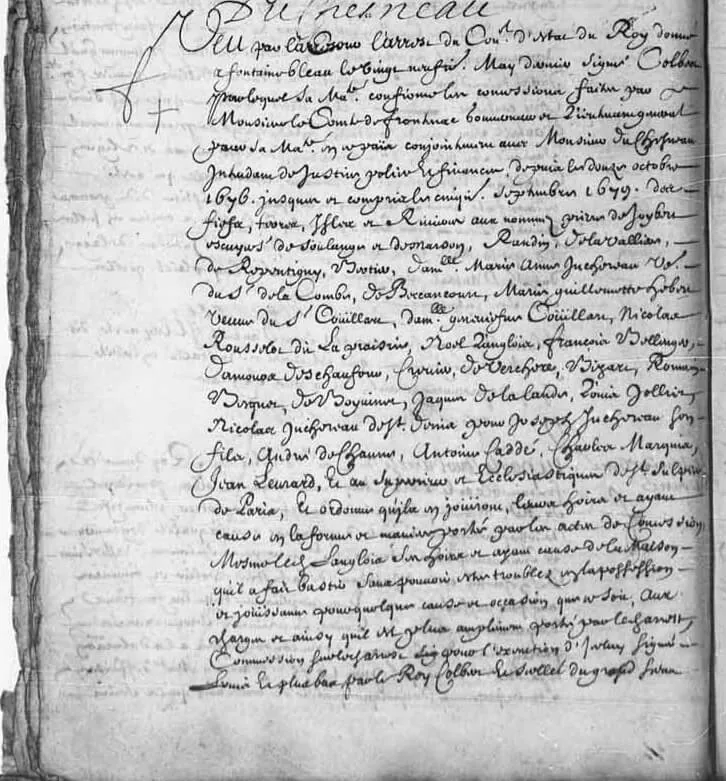
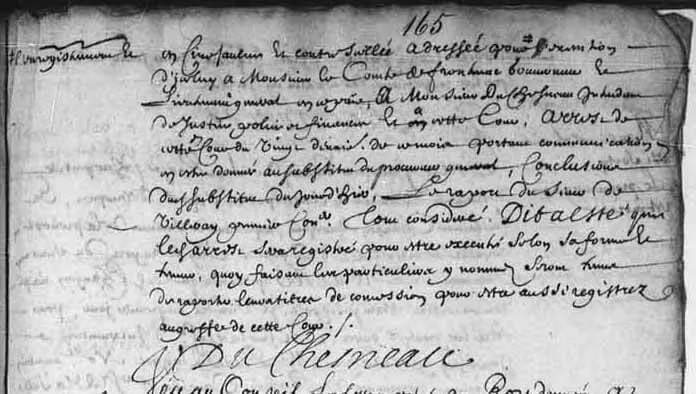
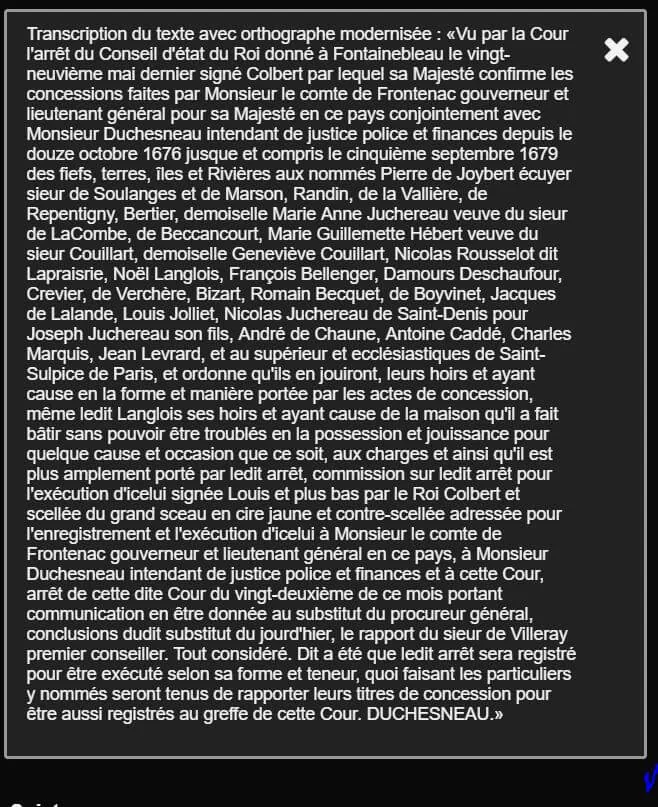
Romain Becquet having died on 20 April 1682 without having fulfilled his obligations as seigneur (to develop, settle and improve the territory granted to him), his concessions were withdrawn from him on 12 March 1683.
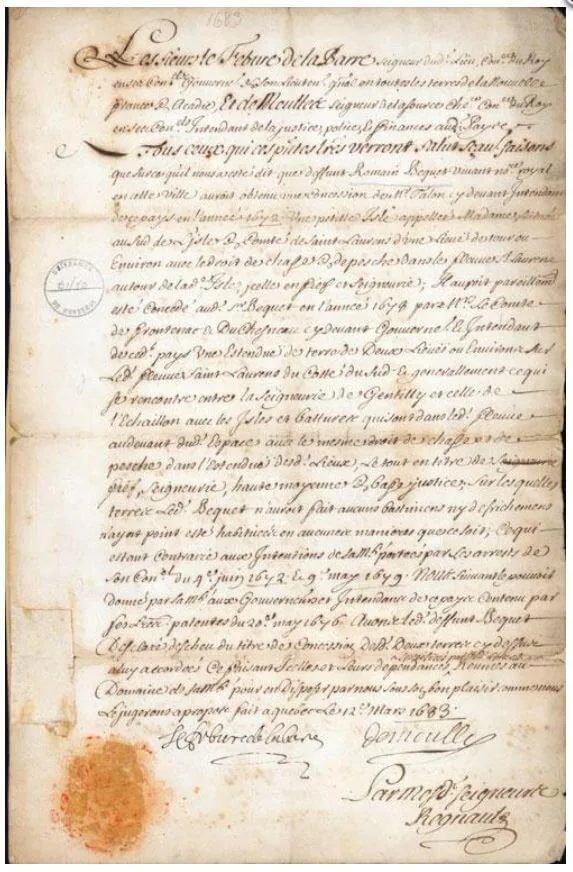
Here is the transcription, in (almost) plain French
1683
” Les sieurs le Febvre de la Barre, seigneur dudit lieu conseiller du Roy
En ses conseils, gouverneur et son lieutenant général en toutes
les terres de la Nouvelle-
France et Acadie et de Meulle
seigneur de la Source chevalier conseiller
du Roy
En sa condition d’intendant de la
justice, police et finances …au dit roi
A tous ceux qui ces présentes lettres verront, Salut ! À savoir faisons
Que sur ce qu’il nous avise dit que défunt Romain Becquet…notaire royal
En cette ville aurait obtenu une
concession dudit Talon ci-devant intendant
De ce pays en l’année 1672 une petite
ile appelée Madame située
Au sud de ile du Comté de
Saint-Laurent d’une lieue de tour ou
Environ avec le droit de chasse et de
pêche dans le fleuve St-Laurent
Autour de la dite ile icelle en fief
et seigneurie ; il aurait pareillement
Été concédé au dit sieur Becquet en
l’année 1679 par Messieurs le comte
De Frontenac et Duchesneau ci devant
gouverneur et intendant
De ce dit pays une étendue de terre
de deux lieues ou environ sur
Ledit
fleuve Saint-Laurent du côté du sud et généralement ce qui
Se rencontre entre la seigneurie de
Gentilly et celle de
L’Échaillon avec les iles en batture
qui sont dans le dit fleuve
Au devant dudit espace avec les mêmes
droits de chasse et de
pêche dans l’étendue des dits lieux
le tout en titre de seigneurie
fief, seigneurie, haute moyenne et
basse justice sur lesquelles
terres ledit Becquet n’aurait fait
aucun batiment ni défrichement
N’ayant point été habitée en aucune
manière que ce soit, ce qui
Étant contraire aux intentions de sa Majesté portées par les arrêts de
Son Conseil du 4 juin 1672 et 9 mai 1679. Nous suivant le
pouvoir
Donné par sa Majesté aux gouverneur
et intendant de ce pays contenu par
Ses lettres patentes du 20 mai 1676 .
Avons ledit défunt Becquet
Déclaré déchu du titre des
concessions des dites deux terres
ci-dessus
À lui accordées Ce faisant Icelles et
leurs dépendances réunies
Au domaine de Sa Majesté pour en disposer par nous sous son bon
plaisir comme nous
le jugerons à propos
fait à Québec le 12 mars 1683
Signé Lefebvre de la Barre De Meulle
Par moi dudit seigneur Regnault “
NB: Jacques Regnault was Lefebvre de la Barre’s secretary
Moreover, a discovery made after patient research by Mr. Louis Poitras has cleared up a number of points.
Mr. Poitras found an inventory drawn up by the notary Genaple de Bellefonds after Romain Becquet’s death; the inventory set out Sieur Becquet’s holdings, among them two seigneuries and fiefs: l’île Madame, granted in 1672, and the future Lévrard-Becquet seigneury, granted on 26 October 1678 by Governor Frontenac and on 10 February 1679 by Intendant Duchesneau. All of it confirmed and made official by the King’s Council in May 1679!
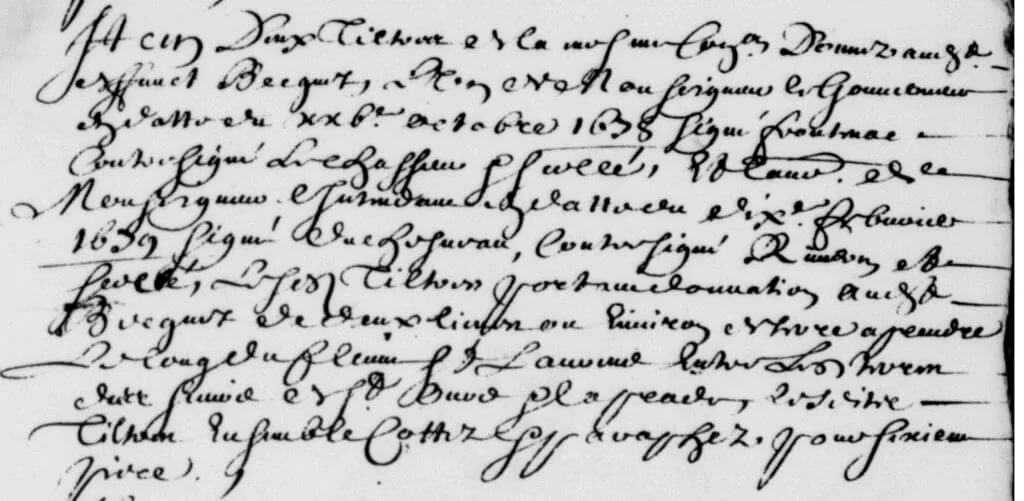
Why a grant in two stages? The Comte de Frontenac is known to have had an uncompromising, inflexible and at times execrable character; he wanted to rule over everything and impose his will, and he often clashed with figures every bit as rigid as himself, such as Monseigneur de Laval, Bishop of Québec, and Intendant Jacques Duchesneau.
Their ceaseless quarrels did in fact lead the king to recall Frontenac and Duchesneau to France; one can imagine that the intendant refused to put his signature to the deed of concession in October 1678 in order to display his own power, or to vex (the word is too mild) Frontenac. For my part, I think both motives guided Duchesneau’s conduct. Nowadays politicians no longer behave that way…
It is therefore clear that l’île Madame, south of l’île d’Orléans, was granted in June 1672 to the notary Romain Becquet, and that a stretch of land some two leagues long between the seigneuries of Gentilly and Deschaillons was granted in several stages, from October 1678 to May 1679. That seigneury between Gentilly and Deschaillons, having been granted by Frontenac and Duchesneau, cannot have come into being in 1672, since Duchesneau served as intendant from 1 August 1675 to 9 October 1682.
The error probably arises from a reading not careful enough, which left the impression that the whole had been granted in 1672.
Errare humanum est.
But rest assured; within the following weeks his two daughters obtained a deed of reconcession.
Alain Manset, Société d’histoire et de généalogie Lévrard-Becquet (Lévrard-Becquet Historical and Genealogical Society)
Where this article sits
Read next
About the Society
A group of volunteers researching, preserving and publishing the history and genealogy of the Lévrard-Becquet seigneury since 2002.
shglb.com/en/1672-ou-1679/