Section
Stories and daily life
A tornado, a young immigrant in 1951, what people drank under the French regime — history as it was lived.
14 articles
- Fragments of history 8
- From yesterday to today 3
- From yesterday to today: local history since prehistory 2
- Ways of life 1
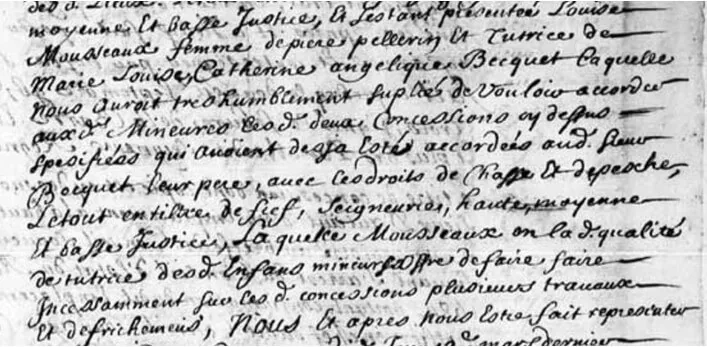 seriesChapter 4: Louise Mousseau (Monceau), the guardian (1635-1707)A widow and grandmother, Louise Mousseau obtained on 17 April 1683 the retrocession of l’île Madame and the seigneury of St-Pierre for her two under-age granddaughters, whose guardian she was.
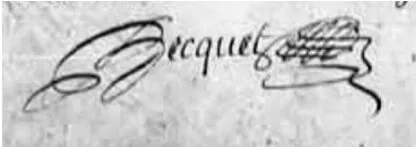 seriesChapter 3: Romain Becquet, seigneur in spite of himself (1640-1682)A royal notary at Quebec, Romain Becquet received l’île Madame and the seigneury of St-Pierre without ever setting foot there; the two fiefs were taken back in 1683, the year after his death.
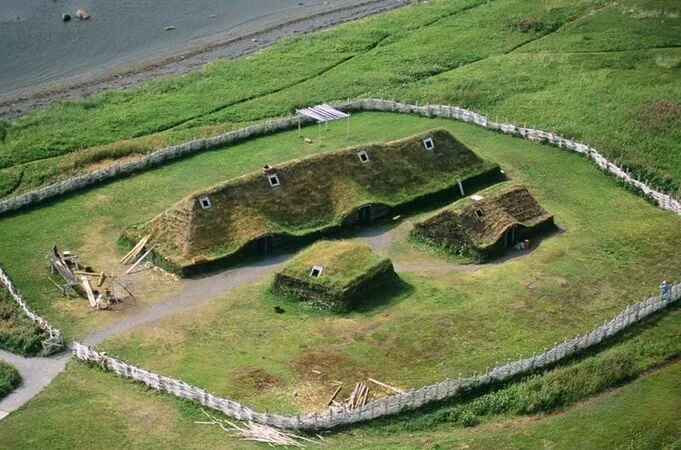 seriesChapter 2: Our region — the arrival of the first Europeans (1534–c.1600)From the Vikings of Anse aux Meadows to the Great Peace of Montréal in 1701, by way of Cartier and Champlain: the arrival of the Europeans, and why the settlement of New France was so slow.
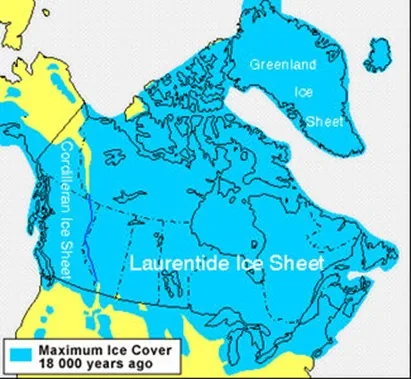 seriesChapter 1: Our region, from prehistory to the arrival of the Europeans.From the glaciers to the Champlain Sea and the sea’s withdrawal 9,600 years ago: the Cap St-Claude site before the Europeans came, and the traces left by its first occupants.
- seriesFrom Yesterday to TodayContents of the series on the region’s history, in four chapters up to 1707: prehistory; the explorations of Cartier and Champlain; the notary Romain Becquet, seigneur in spite of himself; Louise Mousseau, guardian of her granddaughters.
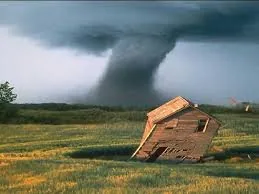 A Tornado at Sainte-Cécile-de-Lévrard.On 19 August 1923 a tornado destroyed 32 buildings at Sainte-Cécile-de-Lévrard: $100,000 in damage, not one injury, and work bees organized by the parish priest Henri Denoncourt.
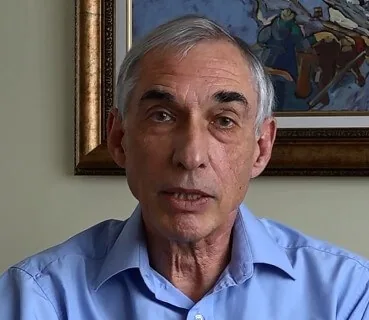 Memories of a Young Immigrant in 1951Alain Manset, who came from France with his parents in 1951, looks back on his first impressions of Canada; now settled in Saint-Pierre-les-Becquets, he studies local and regional history.
- What they drank, under the French regime.Beer, cider, wine, bouillon, spruce beer and guildive: what the settlers of New France drank, as set out in Benjamin Sulte’s Mélanges historiques.
- The CemeteriesFor Yolande Allaire-Roux, cemeteries are genealogies carved in stone: from Pointe Callières to Père Lachaise and Grosse-Ile, then here at home in Saint-Pierre-les-Becquets, with its 1900 charnel house and Father Gouin’s way of the cross.
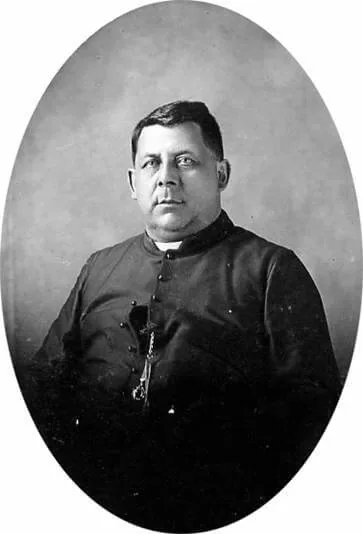 The Gouin Parish PriestsTwo parish priests from Baie-du-Febvre: Philippe-Antonio Gouin, who arrived in 1898 and led an era of great progress, and Gratien Gouin, who died suddenly at the foot of the altar at 53. Both descend from Mathurin Gouin.
- The Written Word RemainsFrom Charles Z. Garceau's black notebook to the Archambault index of the parish registers, the writings that have kept the memory of Saint-Pierre-les-Becquets, and a call to sort your own archives.
- Romain BecquetA notary from a small village near Rouen, Romain Becquet looked after the settlers of the côte de Beaupré and the île d’Orléans; his greffe, kept at the Archives de Québec, is one of the largest of the seventeenth century.
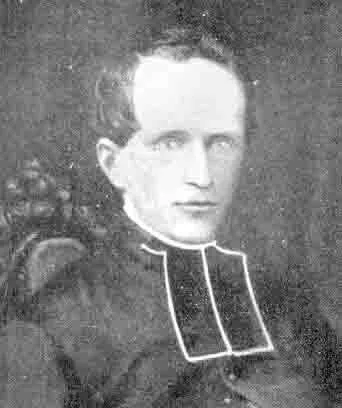 Thomas-Aimé ChandonnetYoungest of fifteen children, born at Saint-Pierre-les-Becquets in 1834, Abbé Chandonnet was an orator, a doctor of theology and third principal of the école normale Laval; from Rome he chose the painters of our church chancel.
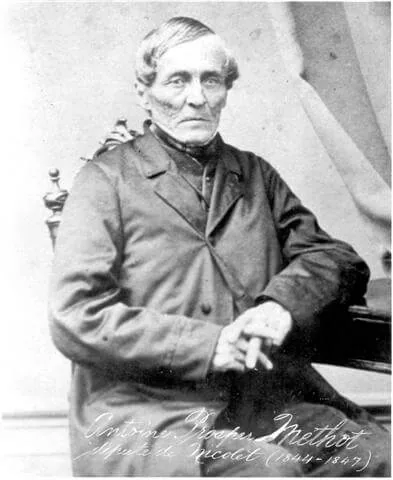 Three Houses, One Family: the MéthotsThree neighbouring houses at Saint-Pierre-les-Becquets and their related occupants: the notary Antoine-Prosper Méthot, the brick house built in 1860 for Dr. Archambault, and the Manoir Baby, which became the Manoir Méthot in 1864.